Philippines first quarter economy slows to five-year-low of 2.8%
 |英字
|英字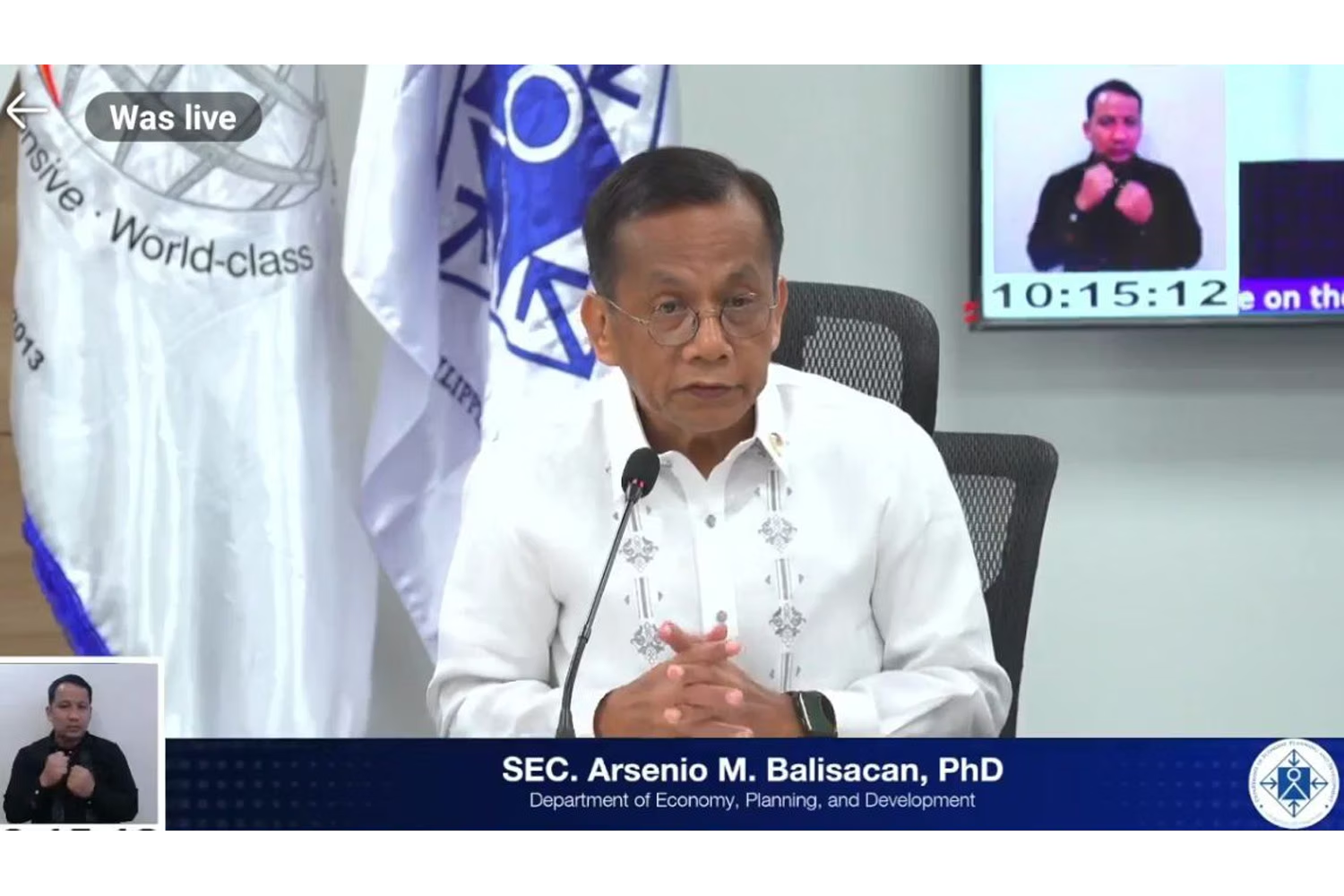
The Philippine economy slowed down to 2.8 percent in the first quarter, mainly due to the impact of the corruption controversy and the conflict in the Middle East, Department of Economy, Planning, and Development (DepDev) Secretary Arsenio Balisacan said on Thursday.
This was the lowest since the economy declined to minus 3.8 percent during the first quarter of 2021 due to the COVID-19 pandemic
In a press conference, Philippine Statistics Authority (PSA) National Statistician and Civil Registrar General Undersecretary Claire Dennis Mapa reported that the country's economic growth was slightly lower than the 3 percent in the fourth quarter of 2025.
Balisacan said slower economic growth in the first quarter "reflects the combined impact of significant domestic and global challenges which includes the "lingering effects of the flood control corruption controversy weighed on consumer sentiment and business and investment confidence."
He also noted the "delays in the passage and subsequent release of the 2026 national budget" which slowed down "the rollout of critical government programs and infrastructure projects, particularly in public construction" and "the conflict in the Middle East, which escalated toward the end of February, triggered higher global oil prices and renewed supply chain pressures, creating additional risks for oil-importing economies such as the Philippines".
"I think the (corruption) scandal has affected broad sentiments, consumption and investment sentiments so it affects the economy broadly, so that is why the policy trust of the administration is to regain that confidence of our economic actors including consumers," he added.
Aside from the existing challenges, Balisacan emphasized that the government is also preparing for the possible effects of the developing El Niño phenomenon, which may emerge in the coming months and persist into early 2027.
"In anticipation of these risks, we support the reactivation of the El Niño Task Force to ensure a coordinated national response aimed at minimizing economic losses and protecting livelihoods," he said.
"Our focus will be on sound water and irrigation management, ensuring the reliability of critical infrastructure, and strengthening climate risk mapping and weather forecasting to support timely and science-based interventions," he added. Robina Asido/PHS