“May my ashes be buried in Patag”: Locals Recall Friendship with a Japanese Who Dedicated His Life to Silay and Patag
 |英字
|英字Last October, a WWII memorial shrine on Mt. Patag in Negros Occidental was renovated by the Silay Government. Locals recalled their friendship with the late Junichiro Doi, who dedicated his life to Silay and Patag.
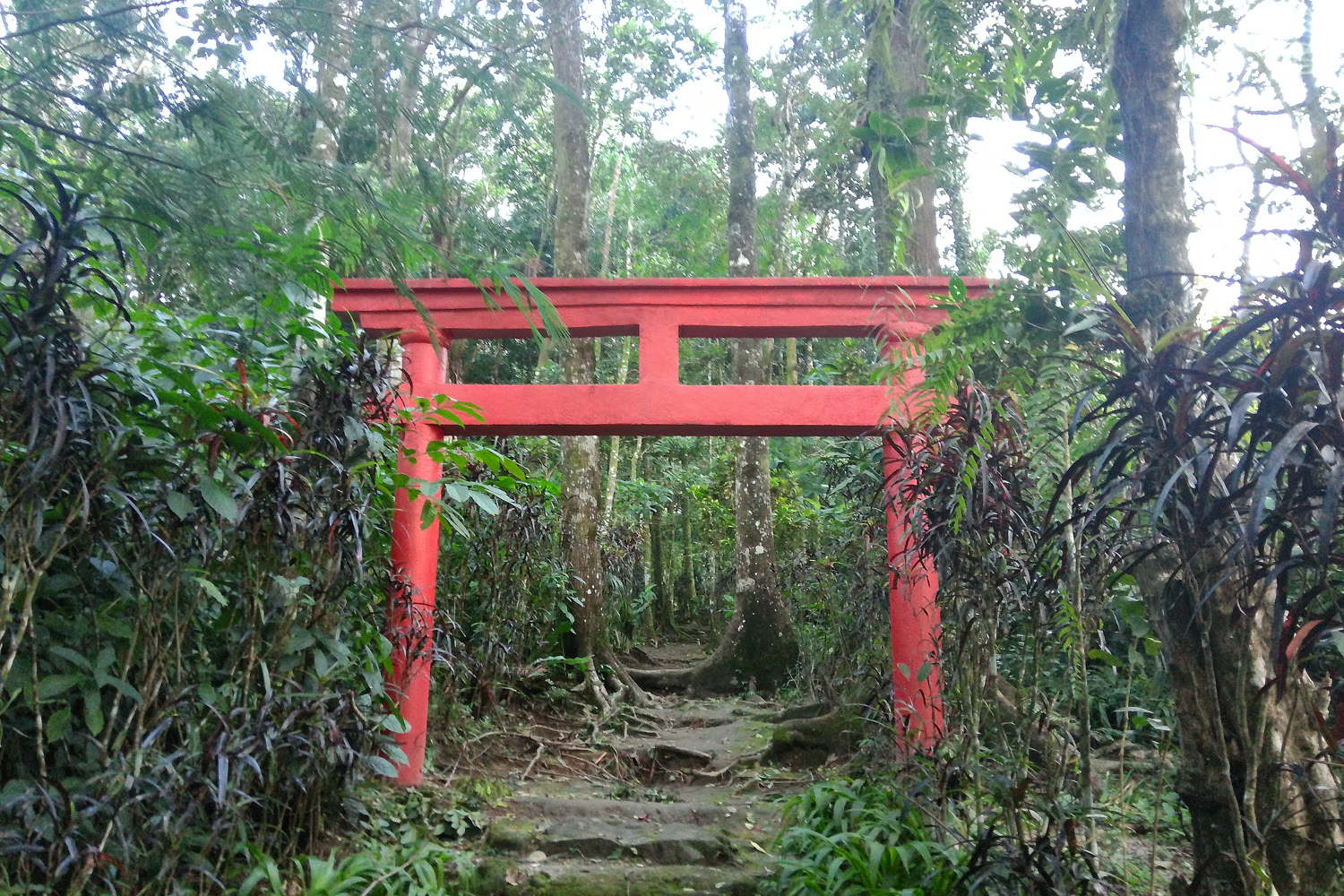
Mount Patag stands in the Province of Negros Occidental, in Negros Island, Philippines. Here, a memorial-shrine dedicated to the victims of World War II was restored by the Silay Government in October last year. Locals took the occasion to speak fondly of the late Junichiro Doi, a Japanese who dedicated his life to the people of Patag and Silay.
During the Pacific War, when the former Imperial Japanese Army constructed defensive positions on Mt. Patag, villagers recalled that the dark mountain glowed so brightly as if a city had appeared overnight. The Japanese soldiers built barracks and defensive installations within days, and even set up generators along a nearby stream. Local farmer Mr. Bonifacio Villarina, heard such stories from his late father.
Negros Island, a major sugar-producing region in the Visayas, was also the site of fierce fighting between Japanese and American forces during World War II, particularly on Mt. Patag. After the war, surviving Japanese veterans and others returned to offer prayers and recover remains. The battle has also been portrayed in a Japanese novel The Negros Island War Chronicle (Negros-to Senki).
Among the many former soldiers who revisited Negros after the war, one Japanese continues to be remembered by locals: the late Junichiro Doi, originally from a coastal town in Kochi Prefecture, who was a young army officer during the war.
Doi frequently visited Mt. Patag until his passing. In addition to establishing the memorial-shrine, he also supported local farmers and helped build schools. His spirit of philanthropy still lives on today, through the Silay-based non-profit organization “Ikaw-Ako” (“You and I”).
Saving Silay’s Cathedral from Destruction
One of the reasons Doi still remains among the memory of locals is due to his tie to a historic cathedral in the port town of Silay, about an hour’s drive down from Mt. Patag. There stands the elegant San Diego Pro-Cathedral, more than a century old.
During the war, as Japanese forces began retreating from the town, Doi—then an army officer—was ordered by his superior to destroy the cathedral. Carrying explosives, Doi and his subordinates made their way there, only to find unarmed civilians sheltering inside. In the end, Doi threw the explosives into the sea at the harbor and falsely reported to his superior that the mission had been carried out. Because of this act, the name “Junichiro Doi” is remembered as the man who saved Silay’s cathedral.
Doi himself never spoke of this story to the people of Silay during his lifetime—a quiet testament to his character.
Building a Shrine on Mt. Patag
Villarina, who was a farmer in Patag, served as one of Doi’s guides when he returned to Negros after the war. Doi also was accompanied by his former Japanese subordinate, Hisao Iwama, to see the remains of the air-raid shelter where they had once been stationed.
After walking through the forest and reaching the shelter site—overlooking the mountain range where he had spent time with his comrades—Doi was deeply moved by the view. He knelt down, wept, and offered silent prayers with his hands clasped. Iwama stood quietly by his side. Villarina still vividly remembers the scene.
Thereafter, Doi frequently returned to Patag. And on the very grounds where he had once fought with fellow soldiers, he constructed a Japanese torii shrine gate and a memorial.
“He was a very kind and quiet man,” Villarina recalled warmly. “He would bring Suntory whisky from Japan, and we would drink together late into the night. I still miss those times.” The story of how Doi saved the cathedral, he added, was not told by Doi himself but by his subordinate Iwama, to the locals.
Mr. Severino Pacete, a former Silay city official who knew Doi in his later years, recalls, “Doi never spoke about the war. Anti-Japanese sentiment was still strong, and I think he carried complicated feelings. We also avoided bringing up the war.”
Restoring the Memorial, Preserving His Legacy
More than 20 years have passed since Doi’s passing, and the generation that experienced the war is aging. Fewer visitors now come to Mt. Patag to visit the memorial. Against this backdrop, the Silay Government restored the Patag memorial last October.
“We were saddened to see the memorial deteriorating,” said Ms. Sulmaca Gerle, Silay’s Tourism Officer who oversaw the restoration. “On the occasion when group tourists were visiting Patag, the city councilor called for its repair, and we conducted the renovations. Fewer people visit Patag these days, but we hope that more Japanese visitors will come again.”
Before leaving Patag, I handed a photograph of Doi to Villarina. He smiled and gazed at it nostalgically for a long while—he did not have a single photograph of Doi until then.
Before he passed away, Doi told his family of his desire to bury half of his ashes in Patag. Today, his urn rests peacefully inside the shrine, listening to the songs of birds in the forest.
By Yoshikaze Kawakami
Guided Tours to Mt. Patag can be arranged through the Silay City Tourism Office.