Marcos, transportation secretary inspect subway project's first tunnel bnreakthrough
 |英字
|英字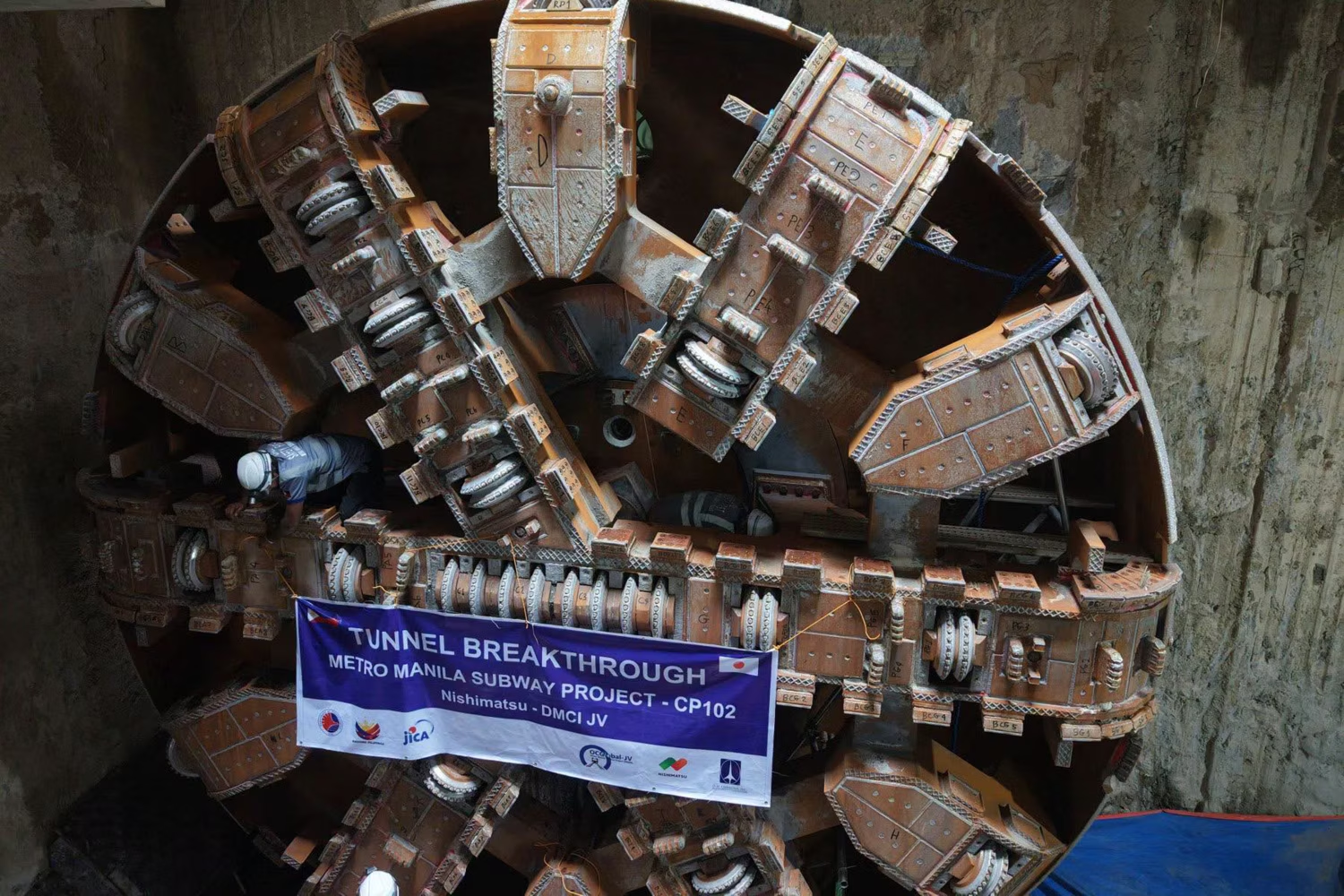
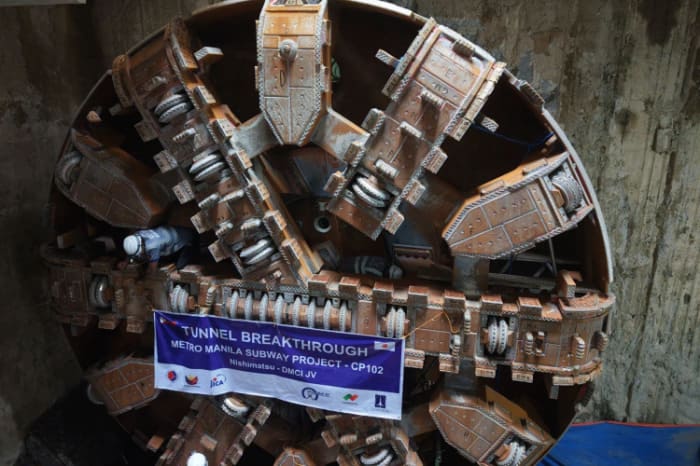
President Ferdinand Marcos Jr. and Transportation Secretary Banoy Lopez inspected the Metro Manila Subway Project’s (MMSP) tunnel boring machine (TBM) breakthrough on Wednesday, connecting the southbound tunnel between the North Avenue and Quezon Avenue Stations.
Marcos has earlier directed the Department of Transportation (DOTr) to expedite the construction of big-ticket railway projects.
Once the MMSP is in operation, residents and commuters using the Quezon Avenue Station will benefit from the project as the rail line will complement the MRT-3 line as explained by the President.
“Andito tayo sa Quezon Avenue dahil yung tunnel boring machine, lumusot na, lumabas na. Kaya tayo nandito to celebrate the breakthrough of the tunnel boring machine. Medyo hiningal kami mataas yung inakyat namin (35 meters). Nakikita nyo yung Subway Project natin dahan-dahan ay nabubuo na. Pagka natapos ito, napakaswerte itong mga nakatira dito, dahil nga mayroon silang subway, mayroon silang MRT, marami silang [dadaanan],” the president said.
“Kaya, this is going to be a very important part of the city. And this is a very important day today because we are commemorating the breakthrough of the tunnel boring machine here in Quezon Avenue,” the President noted.
Marcos personally inspected the tunnel boring machine tunnel breakthrough, going 35 meters below ground level to see firsthand the progress of the project.
Lopez meanwhile, stressed that railway projects will help solve traffic in the metropolis and the adjacent provinces, as this will encourage vehicle owners to use public transport instead.
““Once this subway becomes operational together with other rail lines natin tulad ng MRT-7, yung NSCR (North South Commuter Railway) natin and the existing rail lines natin tulad ng MRT-3, Line 1 at Line 2 ng LRT, masasabi natin na hindi na tayo magsasayang ng oras para sa trapiko and eventually makakasiguro tayo na kahit papano gaganda ang kalidad ng buhay ng bawat Pilipino,” the transport chief added.
The MMSP’s Contract Package 102 (CP102) is composed of the Quezon Avenue and East Avenue Stations, including the tunnels connecting North Avenue Station to Quezon Avenue Station, and Quezon Avenue Station to East Avenue Station.
Once the entire underground rail line becomes fully operational, travel time from Valenzuela City to NAIA Terminal 3 is expected to be reduced to just around 41 minutes from the current one hour and 30 minutes.
Additionally, some of the trains will travel from Valenzuela all the way to Calamba via the NSCR.
Financed by the Japan International Cooperation Agency (JICA), the 33-kilometer, 17-station MMSP is projected to serve around 519,000 passengers daily on its opening year, with the design capacity able to accommodate over 1M passengers without increasing the number of train sets.
The President and Secretary Lopez were joined by Japan International Cooperation Agency (JICA) Chief Representative Takashi Baba, Japan Chargé d'Affaires ad interim Ono Sho, and Nishimatsu-DMCI Joint Venture Project Director Osamu Iwata. Department of Transportation